Tuesday, Feb 10, 2026
1:30pm - 3:30pm
Lecture by:
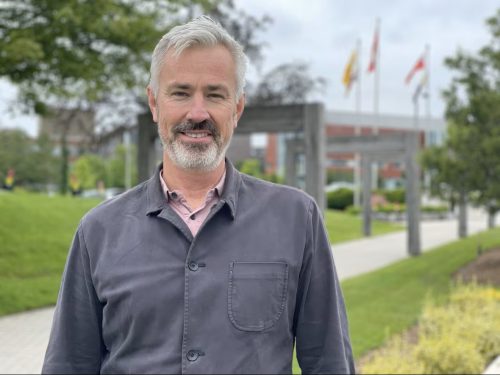
Dr. Mikal Skuterud
A key pillar of the Liberal government’s policy platform in the October 2015 election was a substantial increase in immigration aimed at boosting the Canadian economy. Over the following decade, Canada’s annual population growth rate increased from 0.8% to 3.2%, driven almost entirely by increased immigration. In response to mounting criticism and concerns about the effects of record-level immigration levels on housing and labour markets, the Trudeau government reversed course on its immigration agenda in 2024, imposing hard caps on international student admissions, reimposing regulations on the temporary foreign worker program from 2014, and revising its own immigration targets for 2025-2026 downwards. What went wrong? Was the policy doomed from the start, or was it a failure in implementation? What economic lessons are to be learned from Canada’s 2015-2024 immigration experiment? In this lecture, Professor Mikal Skuterud will answer these questions and offer a roadmap forward for regaining public confidence in Canada’s immigration system.

Mikal Skuterud is a Full Professor in the Department of Economics at the University of Waterloo, Director of the Canadian Labour Economics Forum (CLEF), Fellow-in-Residence and Roger Phillips Scholar of Social Policy at the C.D. Howe Institute, and a Research Fellow at the Institute of Labor Economics (IZA). He received his Master’s degree in Economics from
the University of British Columbia and his Ph.D. in Economics from McMaster University.
His research interests include: the labour market integration of immigrants, labour market policies that influence hours of work, and the economics of trade unions. His work has appeared in the American Economic Review, the Journal of Labor Economics, and the Canadian Journal of Economics, and has received national media coverage in the New York Times and the Globe and Mail.