Courtship and Domain: An Exploration into Why Birds Sing

Tuesday, Nov 26, 2024

1:30pm - 3:30pm

Lecture by:
Lyle Friesen

For most animal species, vocalizations are instinctual and not socially learned. The only known exceptions to date include a small group of mammals – humans, whales and some seals, elephants and bats – and some birds including songbirds, parrots, and hummingbirds. Recent advancements in the field of bioacoustics ─ the science of how animals use sound to communicate ─ have revealed that many birds communicate in highly sophisticated ways. This presentation will focus on why and when birds sing and on some of the probable motivations for their songs: the desire to claim and defend territory and attract mates is a powerful stimulant for vocalization. Female birds often play a major role in determining what, and how, male birds vocalize. I will explore how birds learn to sing, noting that for some species the songs are inborn and innate. But for other bird species, the songs must be learned in stages over a period of considerable time and only after much practice, similar to the manner in which children acquire speech. The mysteries of the dawn chorus, a sublime avian phenomenon heard every day at least somewhere on the planet, will be highlighted. Champion singers ─ those with the most complex songs, or the largest repertoire, or the marathon performers ─ will be identified. Humans shape the physical environments in which birds sing and have profound impacts on the types of avian soundscape that we experience.

About Lyle Friesen

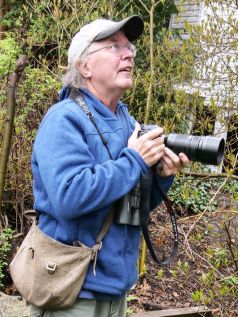
Lyle Friesen

Dr. Lyle Friesen was a Songbird Biologist for the Canadian federal government (his department then known as Environment Canada: Canadian Wildlife Service) from 1995 until his retirement in 2015. His work involved the monitoring and research of native, migratory birds in Ontario with a particular emphasis on species-at-risk and declining species. Lyle was the chairperson of the National Recovery Plan for Acadian Flycatcher and Hooded Warbler in Canada and a member of two other national recovery teams: King Rail and Prothonotary Warbler. He conducted surveys across remote regions of Ontario for Cerulean Warbler (listed as Endangered), Louisiana Waterthrush (Special Concern), and Prairie Warbler. He led the longest, continuous study of Wood Thrushes in Canada (Threatened), assessing their population viability, investigating how they were affected by habitat fragmentation, forestry practices, urbanization, predation, and nest parasitism, and identifying primary wintering grounds for the species in Central America. Lyle was the federal government’s lead expert in Ontario on assessing and mitigating the environmental impacts of wind turbines on birds and bats.