Late to the Table: Canada’s Environmental Awakening and the Future of Conservation

Tuesday, Nov 10, 2026

1:30pm - 3:30pm

Lecture by:
Dr. Rebecca Rooney

When the modern environmental movement burst onto the world stage in the 1960s and 70s, sweeping legislation and landmark international agreements reshaped how governments thought about nature. Canada, for reasons worth examining, lagged behind. This talk traces that history honestly, from the wave of environmental consciousness that produced the American Endangered Species Act, the Ramsar Convention, and the Convention on International Trade in Endangered Species, to Canada’s slower and sometimes halting response.

Out of that urgent global moment, a new scientific discipline was born. Conservation biology emerged in the 1980s and 90s as a mission-driven field dedicated to understanding and protecting the diversity of life on Earth. It was bold, interdisciplinary, and explicitly values-driven in ways that science rarely had been before.

But science, like any human institution, has had to reckon with who it has historically excluded. The final and perhaps most consequential chapter of this story belongs to the present. Drawing on a landmark set of calls to action directed at natural scientists working in Canada, and a recent reflection on their progress five years on, this talk asks what it means to do conservation biology in genuine partnership with Indigenous peoples, and why that shift may be the most important development of all.

About Dr. Rebecca Rooney

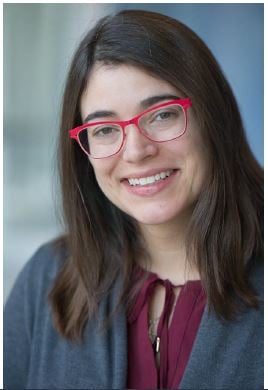
Dr. Rebecca Rooney

Dr. Rebecca Rooney is a Professor of Biology at the University of Waterloo, where she has spent more than a decade training the next generation of ecologists and conservation scientists. She has introduced more than 1,000 undergraduate students to the principles of ecology and conservation biology, and has also mentored dozens of graduate researchers in wetland ecology and environmental monitoring. Her award- winning research program addresses some of the most consequential environmental challenges of our time, including the restoration of degraded wetlands, the management of invasive plant species, and the protection of biodiversity in an era of rapid ecological change. What distinguishes Dr. Rooney’s approach is her commitment to research that moves beyond the laboratory and into the field. She works directly alongside government agencies and environmental organizations, developing the practical tools and evidence-based strategies these groups rely on to restore damaged ecosystems and manage natural landscapes more effectively. This collaborative model, which she calls knowledge co-production, ensures that rigorous science translates into real conservation outcomes rather than remaining confined to academic journals. Over the course of her career, Dr. Rooney has become one of Canada’s leading voices on wetland integrity, restoration design, and the science of keeping natural systems resilient.