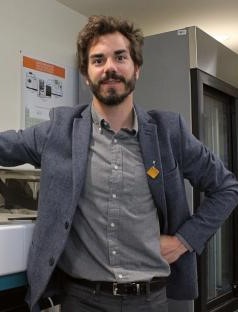
Guillaume Neilsen
Originally from France, Guillaume Nielsen moved to Canada in 2009 and started a Master in Water and soil treatment processes at the Institut National de la Recherche Scientifique (INRS), Centre Eau Terre et Environnement, Québec QC. Nielsen moved up to the Yukon in 2013 and did his Ph.D with specialization in mine water passive treatment in northern climates at the Yukon Research Centre. During his Ph.D, Nielsen implemented pilot scale sulfate reducing bioreactors on the historical Keno Hill mine site, YT, in partnership with Alexco Resource; developed a partnership with Nacho Nyäk Dun First Nation (NND); and Involved the community in the research project.
In 2017, he moved back to the Yukon Research Centre as Research Associate in Mining Life Cycle and built the NSERC Industrial Research Chair (IRC) proposal.
Approved in 2018, the IRC in Northern Mine Remediation led by Dr. Nielsen is a program that partnered with 7 active mines from the Yukon, known as the Yukon Mining Research Consortium.
Guillaume is an outdoor enthusiast and enjoys field work.
In the last few years, he also has become increasingly interested in expanding his tool set to include collaboration with industry, academic and First Nations in water management projects.