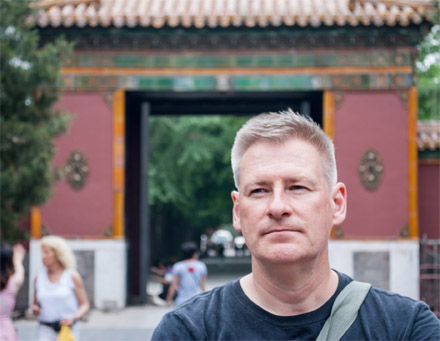
Dr. Blaine Chiasson
Blaine Chiasson was born in Cheticamp, Cape Breton, Nova Scotia. After his BA is in Russian language & history from Dalhousie University, he attended the University of Toronto intending to continue his MA in Russian and Soviet history. After taking Mandarin & Chinese history he became interested in the 500,000 + Russian émigré population in interwar China and switched to Modern Chinese history for his PhD, which he wrote on the topic of Russian and Chinese colonial administration in Manchuria. His monograph, Administering the Colonizer: Manchuria’s Russians under Chinese Rule 1919-1929 (2010) is published by UBC Press. His published articles examine Russian imperialism in China, Manchurian agricultural history, Beijing’s ethnic Chinese Russian Orthodox community and the Russian community in exile. His current project examines the two-year post 1901 Boxer occupation of northern China by the Eight Nation international allied forces and how this military interacted with the Chinese authorities, with ordinary Chinese and the changes that military occupation had on north China’s urban landscape and political history. He was a visiting scholar at Nanjing University and the National Library of China (Republic of China) in Taipei, Taiwan. He has also lived in Manchuria, Hong Kong and Shanghai.